Google Discover Is Not the Same as Google Search
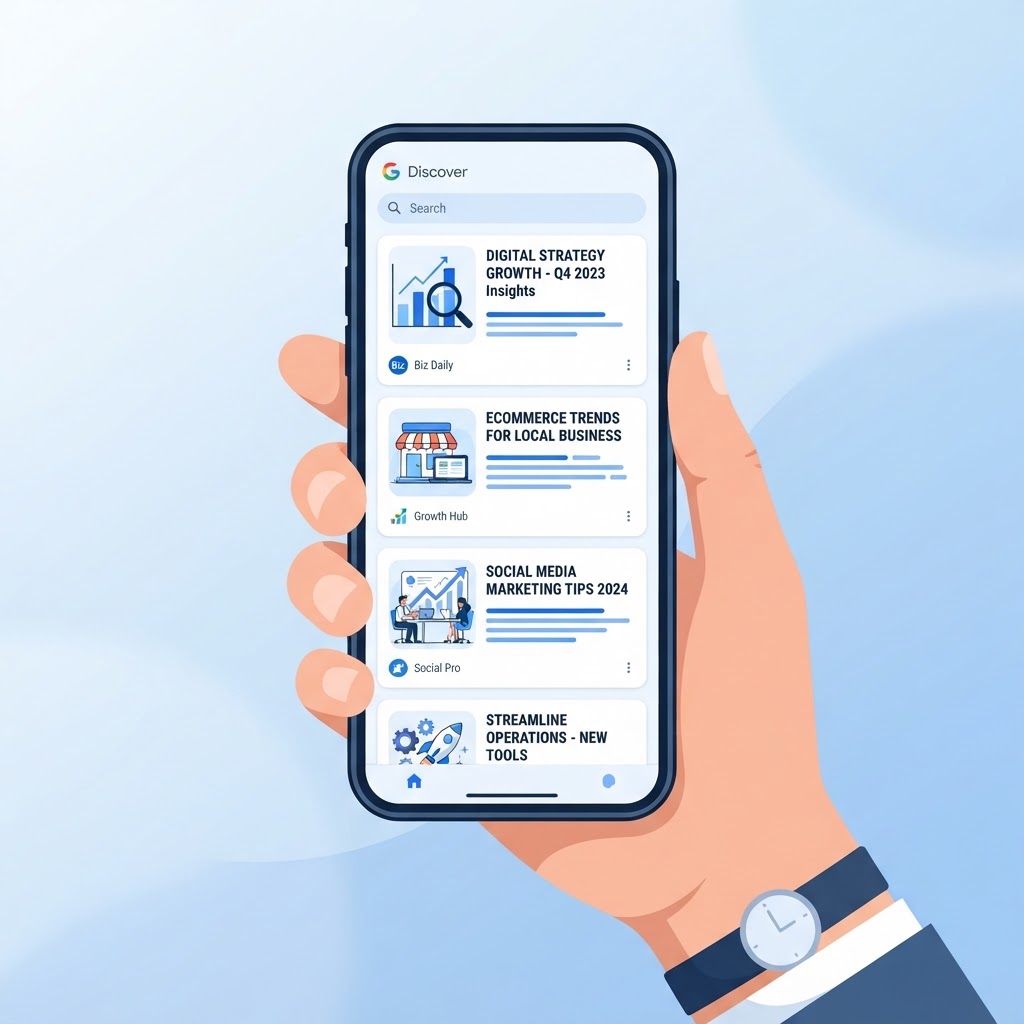
Google has released a February 2026 Discover core update, bringing renewed attention to a part of online visibility that many small businesses overlook. Discover is the personalised feed that appears in Google's mobile app and on some Android devices. Instead of waiting for someone to type a query, it recommends content based on a person's interests and activity.
That distinction matters. A local customer searching for "web designer in Coventry" is showing clear intent. Someone seeing an article about improving their business website in Discover may not be ready to buy, but they may become familiar with your business before they need help. For a West Midlands company, Discover is therefore best treated as an additional awareness channel, not a replacement for local SEO.
This article explains what the update means, what it does not mean, and how to improve your content without chasing visibility for its own sake.
What Google's February 2026 Update Actually Means
Google's official Search Central announcement describes the change as a core update to the systems that surface articles in Discover. As with other core updates, this is not an instruction to switch on one technical setting or submit a special form. It is a change to Google's automated systems for assessing and recommending content.
If your Discover traffic changes, avoid assuming that one page has been "penalised". Google recommends looking at patterns across your content and continuing to create helpful, reliable material for your audience. A short-term change in impressions is not, by itself, proof that your website has a technical fault.
Discover performance can also be naturally volatile because the feed is personalised. An article may be highly relevant to one group of people and invisible to another. That makes it a poor single metric for judging the health of your entire marketing strategy.
Why It Could Matter to a Local Business
Discover tends to favour content that is timely, useful and visually engaging. That can create opportunities for businesses with genuine expertise and a clear point of view.
For example, an independent building firm might publish a practical guide to preparing a home for heavier rainfall. An accountant could explain a relevant change affecting local employers. A hospitality business might create a seasonal guide to events and experiences around Warwickshire. These are not generic sales pages; they are useful answers connected to real knowledge.
A Coventry, Birmingham or Rugby business should still prioritise its service pages, Google Business Profile and local search visibility. Discover may introduce someone to your brand, while search and a well-structured website help them take action later.
Five Content Qualities Worth Improving
1. A clear reason for the article to exist
Start with a customer problem, not a keyword. What has changed? What decision is difficult? What mistake is costing time or money? An article with a specific purpose is more likely to be useful than one assembled around a vague list of popular phrases.
Before publishing, complete this sentence: "After reading this, a customer should be able to…" If you cannot finish it clearly, the topic probably needs refining.
2. First-hand experience
Generic summaries are easy to produce and easy to ignore. Add practical detail that demonstrates experience: what you see during projects, which options tend to work in the real world, what trade-offs a business owner should expect, and how to recognise a poor recommendation.
You do not need to reveal confidential client information. You can use anonymised examples, process explanations, checklists and lessons learned from your work.
3. Strong visual presentation
Images are important in Discover, but "add a stock photo" is not a strategy. Use a relevant, high-quality image that supports the article's subject. Make sure it is properly sized, has accurate alternative text and does not contain misleading text or branding.
For a local business, an original project image, annotated diagram or genuinely relevant photograph will usually say more than a generic picture of someone pointing at a laptop.
4. A headline that is interesting but honest
Your headline should tell readers what they will gain. It can create curiosity, but it should not exaggerate the result or imply a guarantee. Avoid titles that promise instant rankings, effortless growth or secret methods.
Compare "The Website Changes That Can Reduce Enquiry Friction" with "This One Trick Will Triple Your Leads". The first sets a credible expectation. The second may attract a click, but it damages trust and creates a poor experience.
5. Information that stays useful after the news cycle
Timely content can attract attention, but it should still contain durable value. If you write about a Google update, explain the underlying principle and give readers a sensible response. Do not simply repeat the announcement.
A Practical Plan for the Next 30 Days
First, review your existing content. Look for articles that answer real customer questions but have weak introductions, unclear headings, outdated screenshots or no meaningful next step. Improve those before creating a large volume of new posts.
Next, choose two or three subjects where your business has genuine expertise. Create one useful article for each subject, supported by original examples and a clear explanation. Link those articles to the relevant service page, such as your web design, SEO or AI solutions service.
Then check the basics: mobile layout, page speed, image quality, author or business information, clear contact details and a straightforward route to the next step. You can use your contact page as the destination, but the call to action should fit the reader's stage. Someone discovering an educational article may be more ready to download a checklist or view a case study than book a consultation immediately.
Finally, use Search Console to monitor Discover data if it is available for your property. Look at impressions, clicks and the pages receiving attention, but assess the figures alongside enquiries, branded searches and assisted conversions. Traffic without a useful business outcome is only part of the story.
What Not to Do
- Do not rewrite every article just because impressions fluctuate.
- Do not publish daily filler content to chase a feed algorithm.
- Do not use sensational headlines that the article cannot support.
- Do not confuse Discover exposure with local search visibility or guaranteed leads.
- Do not invent expertise, statistics or first-hand experience.
Google's guidance consistently points towards helpful, reliable, people-first content. That is good advice even if a particular article never appears in Discover.
Where Digital Proz Can Help
Discover is only one part of a wider visibility strategy. West Midlands businesses need content that earns attention, a website that explains the offer clearly, and measurement that connects marketing activity to genuine enquiries.
Digital Proz can help you review your existing content, identify useful topics, improve the structure of your website and build a practical SEO strategy around how customers actually search and decide. The goal is not to chase every platform update. It is to create a stronger digital presence that remains useful when algorithms and customer habits change.
Key Takeaway
Google's February 2026 Discover core update is a reason to review the quality and usefulness of your content, not a reason to panic or abandon local SEO. Create genuinely helpful articles, present them well, use evidence and first-hand expertise, and measure whether they support the customer journey.
If you serve customers in Coventry, Birmingham, Rugby or elsewhere in the West Midlands, build content that a real local customer would be glad to find. That is a sound strategy for Discover, traditional search and your reputation alike.