Google Has Made AI Search Visibility Easier to Measure
For the past year, businesses have been asking the same difficult question: if customers discover us through an AI-generated answer, how will we know?
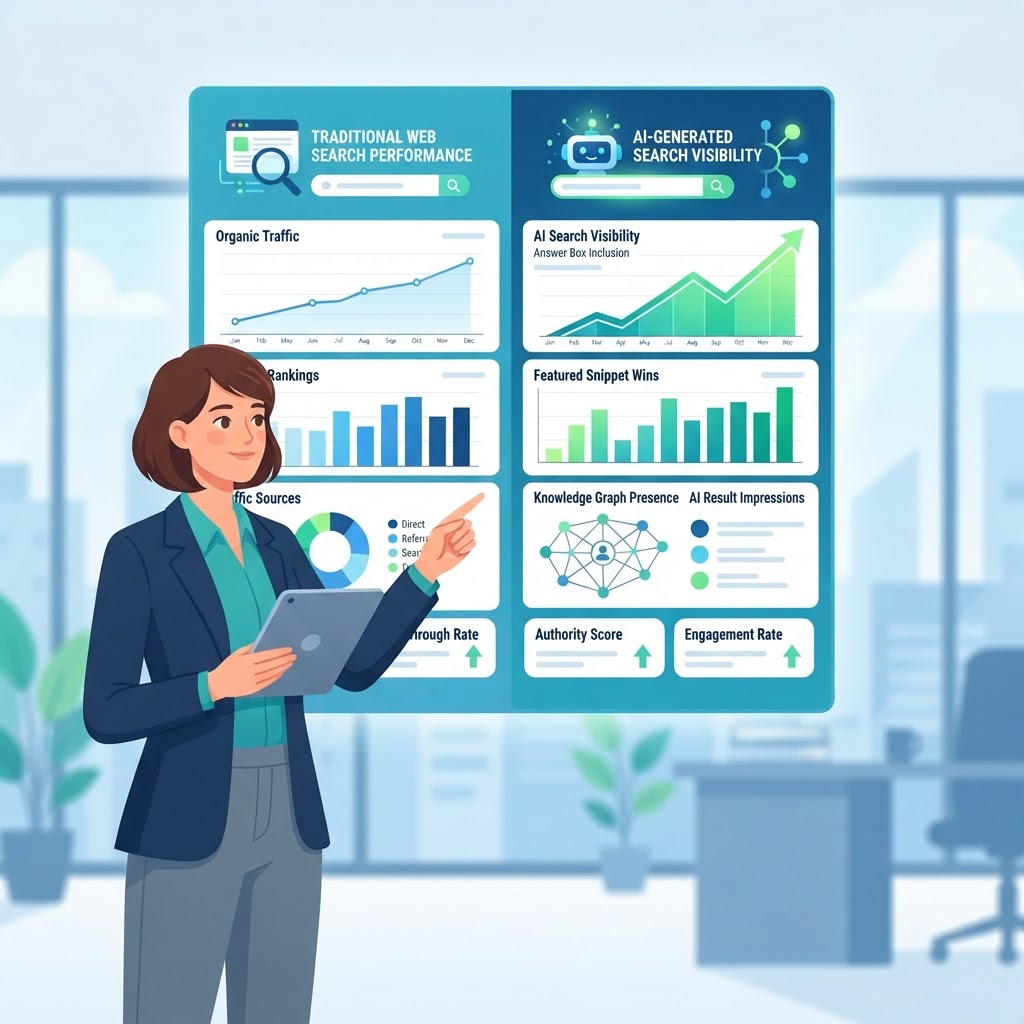
Google has now given website owners a more useful way to investigate. In June 2026, Google Search Central announced dedicated Search Console reports for impressions generated within generative AI features on Search, including AI-powered result experiences. That matters because visibility in an AI answer is not the same as a traditional blue-link ranking, and it should not be judged by traditional SEO metrics alone.
For a small business in Coventry, Birmingham or elsewhere in the West Midlands, the practical issue is simple: you need to know whether your content is being surfaced, which pages are earning attention, and whether that visibility leads people towards your business.

What the New Reports Can Tell You
Google's announcement describes dedicated views for impressions within generative AI features. This gives website owners a more focused way to examine how their content is appearing in AI-driven search experiences rather than treating every impression as if it came from a conventional result.
Which pages are being surfaced
Look for pages that receive visibility in generative results. These may not always be your homepage or your highest-ranking service page. A detailed guide, location page or useful FAQ may be the page that earns attention because it answers a specific question clearly.
Which queries and topics matter
Use the report alongside your existing Search Console data to identify the subjects connected with your visibility. You are looking for patterns: questions about pricing, service areas, common problems, comparisons and buying decisions.
Whether visibility is turning into visits
Impressions are not the same as enquiries. Compare AI-related visibility with clicks, engagement and conversions in your analytics platform. If a page is being surfaced frequently but produces little engagement, the answer may be a mismatch between the searcher's intent and the page they reach.
Why This Is Particularly Useful for Local Businesses
Local businesses often compete for highly specific searches: "website designer in Coventry", "emergency roofer near Solihull" or "accountant for a small business in Birmingham". AI search can combine information from websites, business profiles, reviews and other sources to help answer these questions.
That creates both an opportunity and a risk. A business with clear, accurate service and location information may be easier for search systems to understand. However, outdated opening hours, inconsistent addresses or vague service descriptions can weaken trust and make the business harder to recommend confidently.
The new reporting direction gives local companies a reason to stop guessing. Instead of asking whether AI search is important in theory, you can begin checking whether your own pages are receiving visibility and where the gaps are.
A Practical Monthly Review for Your Business
1. Record your baseline
Before changing anything, note your current organic clicks, impressions, branded searches and enquiries. Record the pages that matter most commercially, including your main service pages and your strongest local pages.
2. Check the pages gaining AI visibility
Review which URLs appear in the generative AI reporting. Ask why those pages may be useful: do they answer a precise question, explain a process, demonstrate expertise or provide strong local context?
3. Improve weak commercial pathways
If an informational article is receiving attention but does not guide readers towards a relevant service, improve the journey. Add a natural link to your SEO services, a related web design service or a useful contact page where it genuinely helps the reader.
4. Check accuracy across the web
Make sure your name, address, phone number, opening hours, services and service areas are consistent. Check your website, Google Business Profile and important directory listings. AI systems are more likely to produce useful recommendations when the underlying information is clear and consistent.
5. Review results against real business outcomes
Do not celebrate impressions in isolation. Look for qualified visits, calls, form submissions, bookings and sales. A smaller amount of relevant visibility can be more valuable than a large number of impressions from people who will never become customers.
What Not to Do with AI Search Data
Do not chase every fluctuation. Search visibility changes over time. A single week of movement is not enough evidence for a major content rewrite.
Do not create pages just to insert keywords. More pages do not automatically create more authority. Build useful resources around genuine customer questions and connect them logically.
Do not confuse being mentioned with being trusted. If your business information is inaccurate, appearing in an AI answer may expose a reputation problem rather than solve a marketing problem. Check what customers see and correct the source information.
Do not abandon traditional SEO. Google's own documentation continues to treat generative experiences as part of Search, not as a replacement for strong technical foundations, helpful content and clear site structure. The best approach is to measure the new surface while continuing to improve the fundamentals.

How Digital Proz Can Help You Turn the Data into Action
Reports are useful only when they lead to better decisions. At Digital Proz, we can help you interpret emerging AI-search visibility alongside technical SEO, content quality, local search signals and conversion performance.
That might mean improving a slow or unclear website, building a better set of location and service pages, or creating content that answers the questions your customers actually ask. We focus on practical improvements rather than vanity metrics, so your visibility supports real enquiries and growth.
If your current reporting does not show where your leads come from, contact Digital Proz for a focused review. You can also read our guide on how AI search is changing SEO for the wider strategic context.
The Key Takeaway
Google's new AI Search reporting is valuable because it turns an abstract concern into something businesses can investigate. You can now start identifying which pages gain generative-search visibility, compare that visibility with visits and enquiries, and improve the parts of your website that matter most.
For local businesses, the goal is not to appear in every AI answer. It is to be understood accurately and surfaced for the questions that signal a genuine need for your services. That is a much more useful target — and one you can now begin measuring.