Why Brand Consistency Now Affects More Than Recognition
Brand consistency used to be discussed mainly as a design issue: use the same logo, colours and tone across your website, brochures and social media. Those things still matter, but there is now another practical reason to keep your brand information aligned.
Search is becoming more conversational and more capable of combining information from different sources. Google's May 2026 Search update describes AI features that can work with detailed questions, local services and richer business information. When a potential customer asks for a service in Coventry, Birmingham or Solihull, your business needs to be understood consistently wherever the answer may be assembled from.
This does not mean trying to "game" AI search. It means making sure a real customer can find the same accurate business story on every important channel.
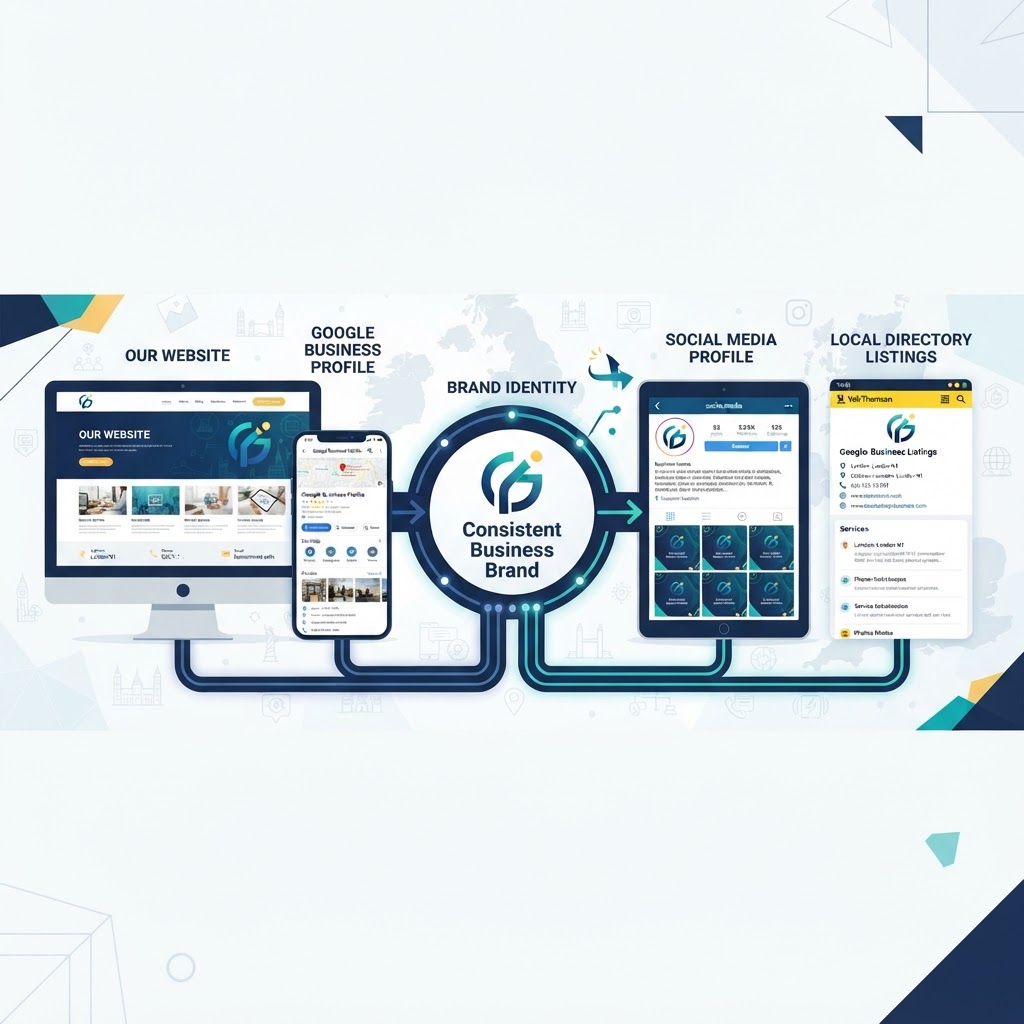
What Brand Consistency Means in Practice
Brand consistency is not about copying the exact same sentence everywhere. It is about making the important facts, positioning and visual identity agree across the places customers use to assess your business.
Your core business details
Your business name, phone number, address, opening hours, service area and website address should be accurate and broadly consistent. Small differences can be reasonable, such as abbreviating "Limited" in one directory, but outdated phone numbers or old opening hours create avoidable confusion.
Your services and specialisms
Describe what you actually do using clear, recognisable language. If your website says you provide web design and SEO, but a directory only says "marketing", customers may not understand the difference. Search systems may also have less detail to connect with a specific question.
Your promise and proof
Your tone of voice, customer reviews, case studies and business description should support the same positioning. A company presenting itself as a specialist local provider on its website but as a low-cost generalist on another profile is sending mixed signals to people and machines.
Why Local Businesses Should Take This Seriously
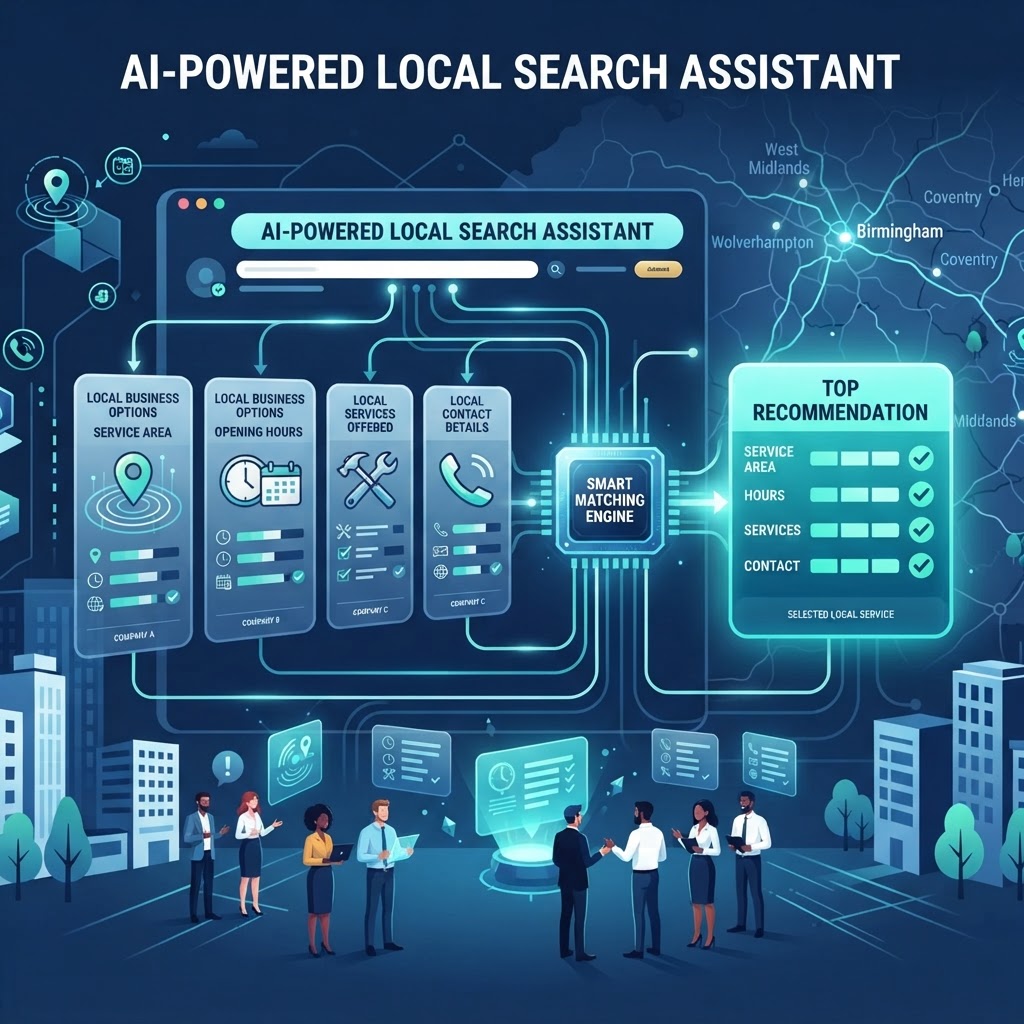
Local searches are often high-intent searches. Someone looking for an emergency service, a web designer or an accountant is not just browsing a topic; they are trying to decide who to contact. Newer search experiences can combine websites, maps, reviews, directories and other public information when helping with that decision.
Google's own description of its 2026 Search direction includes agentic capabilities for local services and bookings. Availability and rollout will vary, but the direction is clear: detailed, current and trustworthy business information is becoming more useful than a disconnected collection of profiles.
For a West Midlands business, that makes consistency a commercial issue. If one listing says you serve Birmingham but another says Coventry only, or if your website lists evening appointments while your profile says you close at five, a customer may choose a competitor simply because the competitor looks easier to trust.

The 30-Minute Brand Consistency Audit
You do not need an expensive rebrand to improve this. Start with a short audit of the information most likely to influence a customer's decision.
1. Create a source-of-truth document
Write down your approved business name, contact details, service areas, opening hours, primary services, short description, preferred wording and links. Include the date it was last checked and the person responsible for future updates.
2. Check the customer-facing channels
Review your website, Google Business Profile, main social profiles, trusted directories, trade memberships and major review platforms. Look for old branding, broken links, inconsistent descriptions, duplicate listings and services you no longer provide.
3. Compare the details that affect decisions
Pay particular attention to the facts a customer needs before making contact: what you do, where you work, when you are available, how to reach you and what makes you credible. Correct the channels that are most visible and most commercially important first.
4. Check the journey back to your website
Every important profile should point to the most relevant page, not automatically to an old homepage. A service listing should lead to the matching service page; a local listing should lead to a page that explains your coverage. If the website itself is unclear or difficult to use, review your web design options before spending more on promotion.
5. Set a repeatable review rhythm
Check core details whenever your team, premises, services or opening hours change. Otherwise, schedule a quarterly review. Ask new staff to follow the source-of-truth document rather than creating their own wording from memory.
What Not to Change Just for AI Search
Consistency does not mean flattening your personality or filling every profile with keywords. Do not publish awkward, repetitive descriptions designed for a machine while making the customer work to understand you.
Do not create fake locations, claim services you cannot deliver or copy reviews between platforms. Do not assume that adding more directory listings will compensate for a weak website or poor customer experience. Accurate information is the foundation; useful content, genuine proof and a clear conversion path still do the heavy lifting.
If you are improving your visibility more broadly, our guide to measuring AI search visibility explains why impressions should be compared with visits and enquiries, not treated as the goal by themselves.
How to Turn Consistency into a Stronger Brand
An audit is most valuable when it reveals a clearer position. Once the facts agree, look for opportunities to make the brand easier to remember and easier to choose.
Use a short description that explains who you help, what problem you solve and where you operate. Make your service pages answer real customer questions. Use the same visual identity across channels, but adapt the format to each platform rather than posting identical content everywhere.
For technical foundations and search performance, a focused SEO service can help connect your brand information, site structure and content strategy. The aim is not to make every page sound the same; it is to make every page contribute to the same accurate understanding of your business.
How Digital Proz Can Help
Digital Proz can help you review the customer-facing parts of your brand together: website messaging, service pages, local search information and the visual identity that ties them together. That is especially useful when your business has grown, added services or changed its service area and the online details have drifted apart.
Start with the 30-minute audit above. If it uncovers larger problems with your website structure, local visibility or positioning, contact Digital Proz for a practical review focused on the changes most likely to support real enquiries.
The Key Takeaway
Brand consistency is no longer just a visual polish exercise. It helps customers understand your business quickly and gives increasingly capable search experiences clearer, more reliable information to work with.
For businesses across Coventry, Birmingham and the wider West Midlands, the best next step is simple: document the facts, check the important channels, fix contradictions and review the system regularly. A clear, trustworthy brand is good marketing whether the customer finds you through a map, a traditional result or an AI-led search experience.